

France to send extra forces to Greenland in coming days: Macron
Jan 17, 2026
by Ewa Andersson Dec 04, 2025
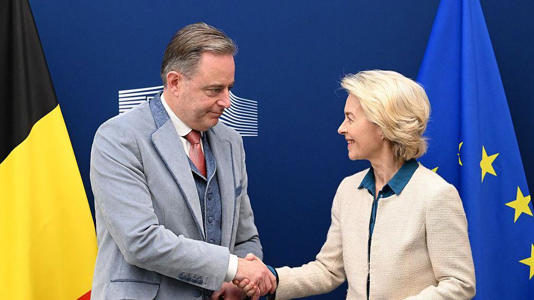
The EU's proposal, which has been championed by the German Chancellor, Friedrich Merz, would see €140bn (£123bn) of Russian state assets held in Belgium transformed into a "reparations loan" to support Kyiv financially next year.
The majority of EU countries support the plan and some have criticised the Belgians for blocking it. Belgium argues such a move would imperil a peace deal in the short term and risk legal action by Russia in the future.
Russia has condemned the proposal and one of its top bankers has threatened the EU with 50 years of litigation if the idea becomes reality.
The European Commission is set to put forward ways of resolving the impasse, but Maxime Prévot has complained the text being tabled on Wednesday does "not address our concerns in a satisfactory manner".
EU countries have already used profits generated from around €210bn of frozen Russian assets to fund Ukraine's ongoing defence following the full-scale invasion in February 2022.
But using the assets themselves has proved far more controversial.
EU leaders are set to vote on the reparations loan at a summit in Brussels later this month, but it is far from clear that an agreement will be reached.
Belgium has been the most vocal critic of the scheme because most of the assets frozen by the EU - €185bn - are held at Euroclear, the Brussels-based central securities depositor.
The Belgian government argues it would bear the brunt of any Russian legal action if future problems emerged from an EU loan to Ukraine funded with these assets.
Maxime Prévot says the risks are clear: "If Russia takes us to court it will have every chance of winning and we, Belgium, will not be able to repay those €200bn, because that represents the equivalent of an entire year of the federal budget."
"It would mean bankruptcy for Belgium."
Jan 17, 2026

Dec 13, 2025
Dec 14, 2025

Feb 16, 2025
Jul 02, 2025
Jan 24, 2026

Apr 24, 2025
Nov 01, 2025
